Owners
7 min read
21 July 2026
The Real Cost of Preparing a Property for Short-Term Guests
Setup is where owners most often overspend on the wrong things and underspend on the things guests notice. A category-by-category view of what actually has to be funded before the first booking.
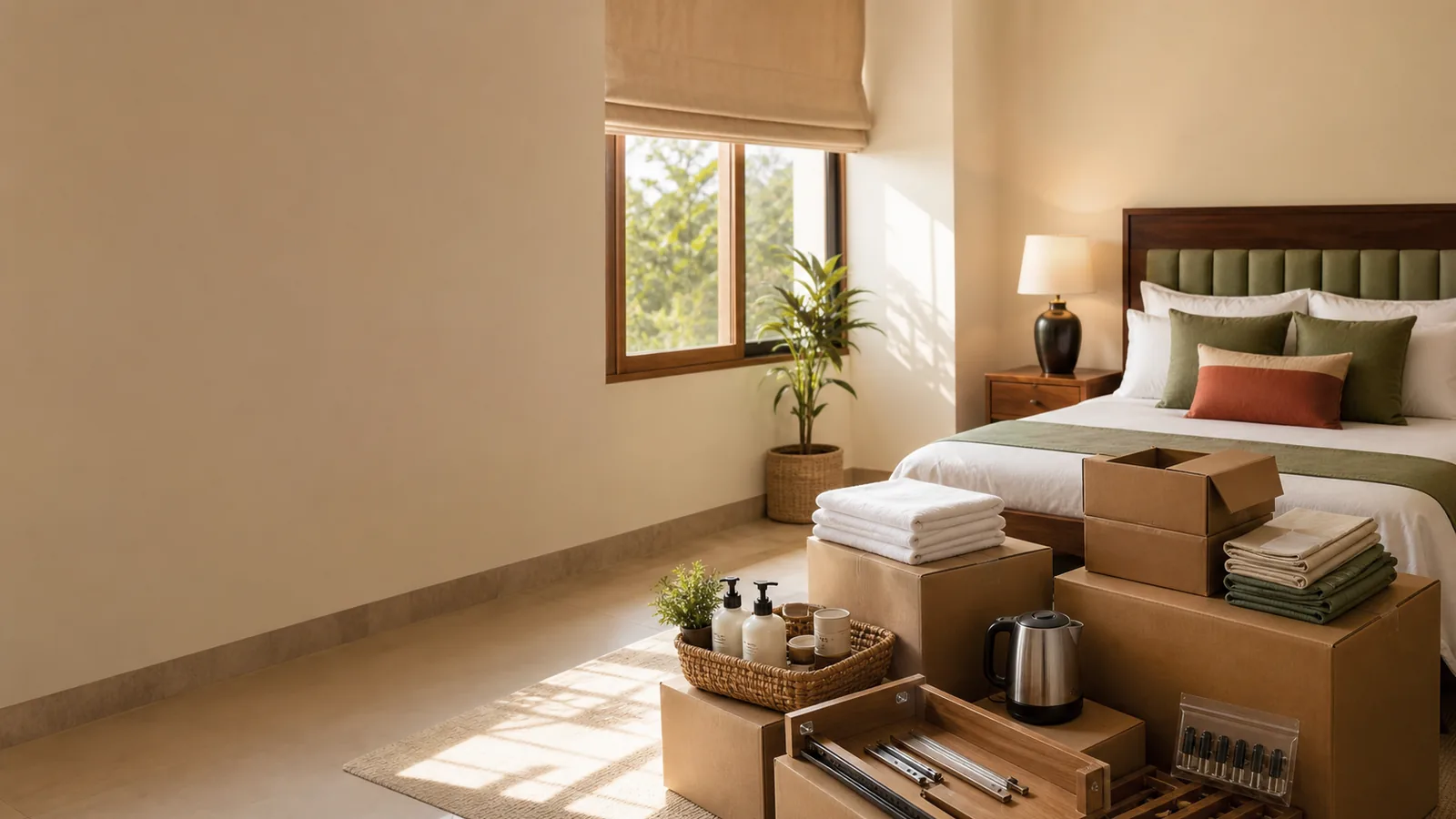
Every short-stay property has a bill that arrives before any income does. The owner funds it. Understanding its shape, rather than its total, is the difference between capital that improves performance and capital that simply disappears into a home. The total is always property-specific.
We do not publish setup packages or indicative figures, because a genuine scope depends on the property, the market it competes in and the standard it needs to reach. What we can set out is the structure of the spend and where it tends to go wrong.
The categories
Furniture. Beds and mattresses first, and better than you would buy for a tenant. A mattress is the single most reviewed object in a short-stay property. Then seating, dining, and storage. Wardrobes matter more than owners expect: guests live out of suitcases and judge a property partly by whether they can unpack.
Soft furnishing and window treatment. Curtains or blinds that genuinely darken a bedroom. This is a small line that produces a disproportionate share of complaints when it is missed.
Appliances. Air conditioning where the climate demands it, refrigeration, washing machine, water heater, television. Reliability matters more than specification. A mid-range unit that works is worth more than a premium one waiting on a service call.
Connectivity. A proper broadband connection with a router positioned for the whole property, not a corner of it. For any property that will host business travellers this is not optional, and slow Wi-Fi is one of the fastest routes to a mediocre review.
Kitchen. Cookware, crockery, glassware, cutlery and basic utensils, in quantities matched to the sleeping capacity rather than to a couple. If the guest profile cooks, this needs to be genuinely usable.
Linen and towels. Not one set. Short-stay properties need rotation stock so a turnover never waits on laundry. That usually means several sets per bed and per bathroom, sized to the expected turnover rate. Linen is also the fastest-depreciating category in the property, so replacement is an ongoing cost, not a one-off.
Guest supplies and initial consumables. Bathroom amenities, cleaning materials, kitchen basics, and the stock that gets replenished between stays.
Access and safety. Smart locks or a comparable access system, so arrival does not depend on a person being physically present. Smoke detection, a fire extinguisher, a first aid kit, and any building-specific requirements.
Repairs, paint and deep cleaning. The work that brings the property from “lived in” to “photographable”. Usually modest, occasionally the largest line in the whole scope.
Photography and styling. The listing is the storefront, and the first image decides whether anyone reads the rest. This is a small spend with an outsized effect on rate and occupancy.
Licensing, registration and permits. Where applicable, and jurisdiction-specific.
Insurance changes. A property let to short-stay guests may need a different policy from an owner-occupied or tenanted one.
Technology subscriptions and building requirements. Channel or pricing tools, and any access, deposit or registration obligation the building imposes.
Where the money is usually misallocated
Three patterns recur.
Overspending on visible décor, underspending on sleep and climate. Guests forgive a plain wall. They do not forgive a poor mattress, a bedroom that will not go dark, or air conditioning that cannot cope.
Buying a home rather than an operation. A property being furnished for guests needs durability, replaceability and standardisation. Fragile, irreplaceable or highly personal pieces create ongoing cost and risk.
Under-buying linen. The most common false economy. Insufficient rotation stock means either a delayed turnover or linen going back onto a bed before it should.
What “not every property needs everything” actually means
A furnished second home in good condition may need very little: linen stock, kitchen gaps, access hardware, safety equipment, photography. An unfurnished new-build needs essentially the whole list. A property coming off a long tenancy usually needs repairs and repainting before anything else is worth buying.
This is why the setup scope comes after the assessment rather than before it. Specifying a scope without seeing the property, its competition and its target guest is guessing with someone else’s money.
The part that survives
Setup capital is not spent in the way an operating cost is. Furniture, appliances and property improvements remain part of the asset. If circumstances change, a suitably configured property may later be repositioned for medium-term accommodation, conventional leasing, personal use or sale, subject to market demand, contractual obligations and local regulations.
The operating model can change. The property does not disappear.
How Timeless works through it
We assess what the property requires, recommend priorities, advise on furnishing and presentation, help source items, coordinate suppliers, manage readiness, check completion and prepare the property for launch. Nothing is purchased without approval, and the scope is built for the specific market the property will compete in.
We do not furnish blindly. We first determine what the property requires to compete.
A property assessment is the step that produces a real scope.
Continue reading
- What Makes a Property Suitable for Short-Term Rental in India?
Owners
8 min read
- What Should a Property Owner See in a Monthly Management Statement?
Owners
6 min read
- When Short-Term Rental Is the Wrong Strategy
Owners
7 min read